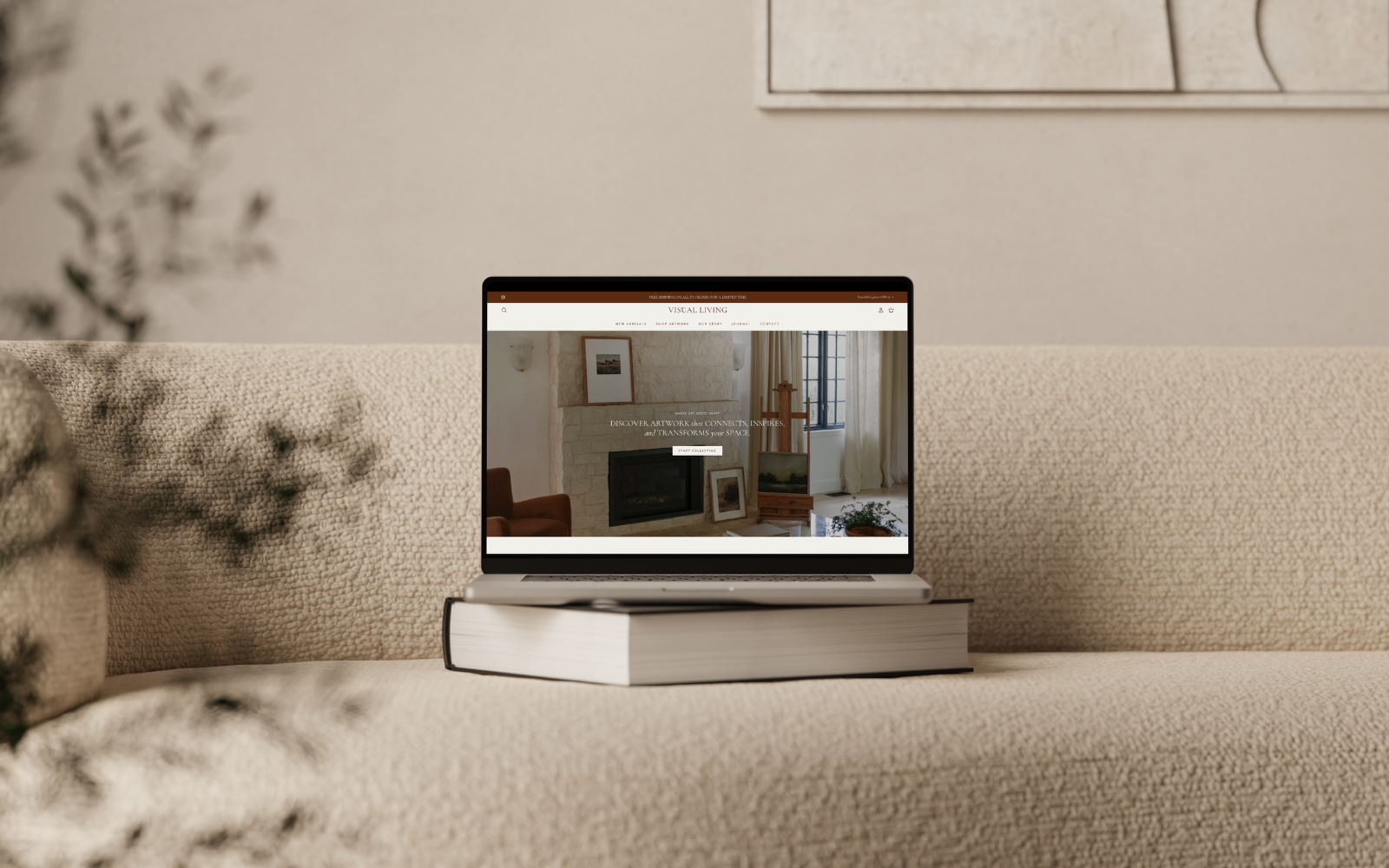

Squarespace vs Shopify for Interior Designers: Which Platform Fits Your Brand?
Choosing a website platform is one of those decisions that feels simpler than it actually is. On the surface, they all do the same thing: they let you build a website. But when you dig deeper, when you start thinking about design flexibility, e-commerce capabilities, SEO, how the platform will represent your practice, and how much time you want to spend maintaining it, the platforms diverge significantly.
For interior designers and design-led brands, the choice between Squarespace and Shopify matters. Not because one is objectively better, but because they're built for different business models, and choosing the wrong one for your practice will either limit your growth or create unnecessary complexity.
Let's walk through the key considerations and help you figure out which platform is actually the right fit for your business.
Aesthetic Flexibility and Design Control
Squarespace has built its reputation on beautiful templates and design-forward thinking. The platform is visually lovely. If you explore Squarespace's demo sites, they generally look sophisticated and well-designed out of the box. The templates are curated, the aesthetic is consistent, and there's an emphasis on clean, modern design.
This is also Squarespace's limitation. You're choosing from a set of pre-designed templates, and while you can customise colours, fonts, and layout to a degree, you're working within constraints. If your brand identity requires a very specific visual direction, or if your design sensibilities push against Squarespace's inherent aesthetic, you might feel constrained. The platform encourages a certain look, it's hard to make a Squarespace site look cheap or poorly designed, but it's also hard to make it look dramatically different from other Squarespace sites.
Shopify approaches this differently. Shopify itself is more utilitarian in its design approach. The default Shopify experience is less beautiful out of the box; the platform prioritises functionality over aesthetic perfection. However, Shopify offers significantly more flexibility if you're willing to work with a developer. You can customise almost everything if you have the technical capability or budget to hire someone. The platform is built on a more open architecture, which means there's more room to create something truly distinctive.
For your practice, this matters in two ways. First, what does your brand require? If your visual identity is distinctive and specific, and you need your website to be an accurate expression of that brand, Squarespace's template constraints might feel limiting. You might find yourself trying to force your brand into a Squarespace template instead of the platform supporting your vision. Shopify, with developer support, can get you there.
Second, how does the platform itself reflect on your practice? A beautifully designed Squarespace site says something about you, it signals that you care about aesthetics and that you've invested in a premium platform. A highly customised Shopify site built with a developer also signals something, it suggests technical sophistication and bespoke thinking. A generic Shopify template might feel less polished than a generic Squarespace template. The default experience matters.
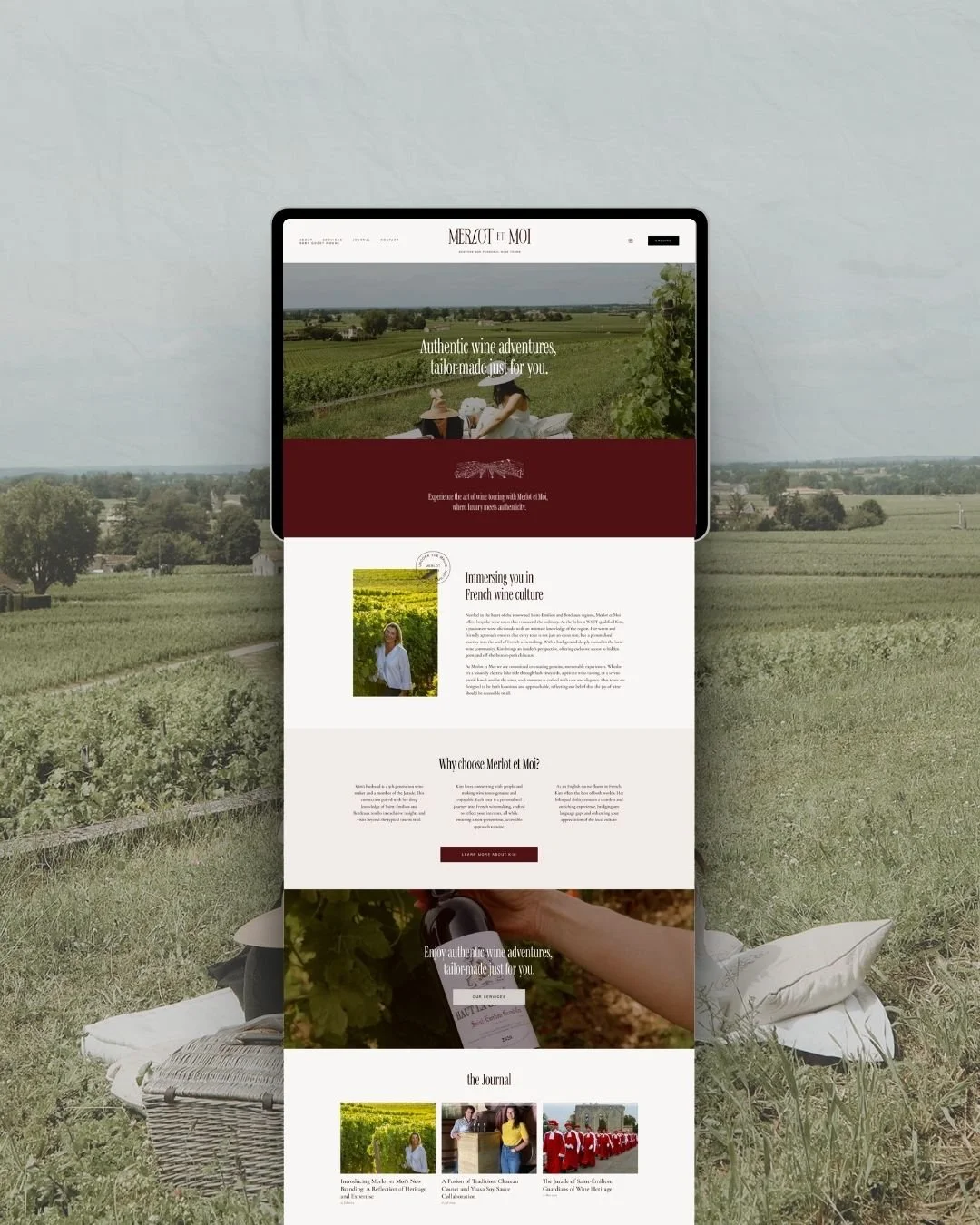
Squarespace Website Design for Merlot et Moi, by The Brand Muse

Shopify Website Design for Midspring, by The Brand Muse
E-Commerce Capability: Service-Only vs Service Plus ProductThis is the most significant functional difference between the platforms. Shopify is built around commerce. It's designed for selling products, managing inventory, processing orders, and handling all the logistics of an online store. E-commerce is baked into the core of the platform; it's first-class functionality.
Squarespace offers e-commerce capabilities, but they feel bolted on. You can sell products on Squarespace, and the functionality is adequate for basic needs. But if you're serious about selling, if you need inventory management, complex product variants, or high transaction volume, Shopify's commerce capabilities are far more robust.
For interior designers, this distinction is important. Most interior design practices are service-based. You're selling design consulting, project management, space planning, or finished design schemes, not physical products. For a service-only practice, Squarespace's e-commerce limitations don't matter because you likely aren't using them at all.
But some interior design practices have evolved beyond pure services. You might sell a curated collection of rugs and furnishings that you recommend to clients. You might sell design guides or digital products. You might have a sideline of home goods or branded merchandise. If any of that is part of your business model, Shopify becomes significantly more attractive. Its commerce platform can actually support real business volume.
The line here is pretty clear: If you're service-only, Squarespace is fine. If you're selling products alongside services, or if you think you might in the future, Shopify is the better long-term choice.
SEO Capabilities and Search VisibilityBoth platforms offer SEO functionality, but they approach it differently. Squarespace has built SEO into the platform from the ground up. The platform is generally SEO-friendly out of the box. You can manage meta descriptions, optimise your site structure, and make SEO choices without needing to understand code. Squarespace makes it relatively easy to build a site that performs well in search.
Shopify's SEO capabilities are also solid, but the platform requires more hands-on work to optimise. You have control over meta tags, URLs, and site structure, but it's less automatic. Additionally, Shopify's default site speed isn't always as optimised as Squarespace's, which can affect SEO performance. However, if you're willing to do the optimisation work, or pay someone to do it, Shopify can absolutely rank well in search.
For your practice, SEO matters. Potential clients are searching for "interior designer in [city]" or "brand design for architects" or specific types of project work. You want your website to appear in those searches. Both platforms can support that, but Squarespace makes it easier without additional effort.
If SEO is a priority and you don't have the budget or expertise to optimise a Shopify site, Squarespace's built-in SEO functionality is a genuine advantage. If you're working with a developer or marketing specialist, Shopify's flexibility might actually serve you better because you can implement more sophisticated SEO strategies.
Blog and Content FunctionalityBoth platforms have blogging functionality, which matters because content is increasingly how design practices attract clients. You want a platform where creating and publishing content feels natural, not like an afterthought.Squarespace's blogging tools are elegant and integrated. Creating a blog post, managing archives, and displaying content in your site design feels like a native feature. The visual experience of managing your blog is pleasant, which matters because if it's pleasant, you're more likely to actually use it. Shopify's blogging functionality is also there, but it feels slightly more utilitarian. It works, but it's not as beautifully designed as Squarespace's.
For your practice, this matters if content marketing is part of your strategy. If you're planning to blog consistently, Squarespace's more elegant blogging interface might make that easier. If you rarely update a blog, it doesn't matter.
Ease of Maintenance and Ongoing Updates
Squarespace handles all backend maintenance, updates, and hosting. You don't have to think about it. You log in, manage your content, and the platform takes care of everything else. This is genuinely valuable. It means you're not managing server updates or worrying about security patches or dealing with hosting issues. Squarespace handles all of that.
Shopify handles most backend work as well, it's a hosted platform, so you don't have to manage servers. However, if you customise Shopify with custom code or apps, there's more ongoing complexity. You might need to manage app updates or keep custom code compatible with platform changes. It's not as hands-off as Squarespace.
For most interior designers who aren't technically experienced, Squarespace's simplicity is genuinely valuable. You can update your site, publish content, and not worry about the technical backend. With Shopify, you might feel like you need developer support for significant changes, which creates ongoing dependency.
Cost Considerations
Squarespace pricing is straightforward. Plans range from about $12 to $33 per month (as of 2026), depending on features. E-commerce adds $23 to your monthly cost. Once you choose a plan, your costs are predictable.
Shopify's base plan starts around $29 per month, which is comparable to Squarespace's higher tiers. However, Shopify's true cost often extends beyond the base platform. If you're using apps to extend functionality, or if you're paying for developer customisation, your actual costs can climb significantly. The platform itself is competitively priced, but the ecosystem around it can add expense.
For budget-conscious designers just starting out, Squarespace's lower entry price and simpler cost structure is appealing. For practices that need e-commerce functionality or custom development, Shopify's flexibility is worth the additional investment.
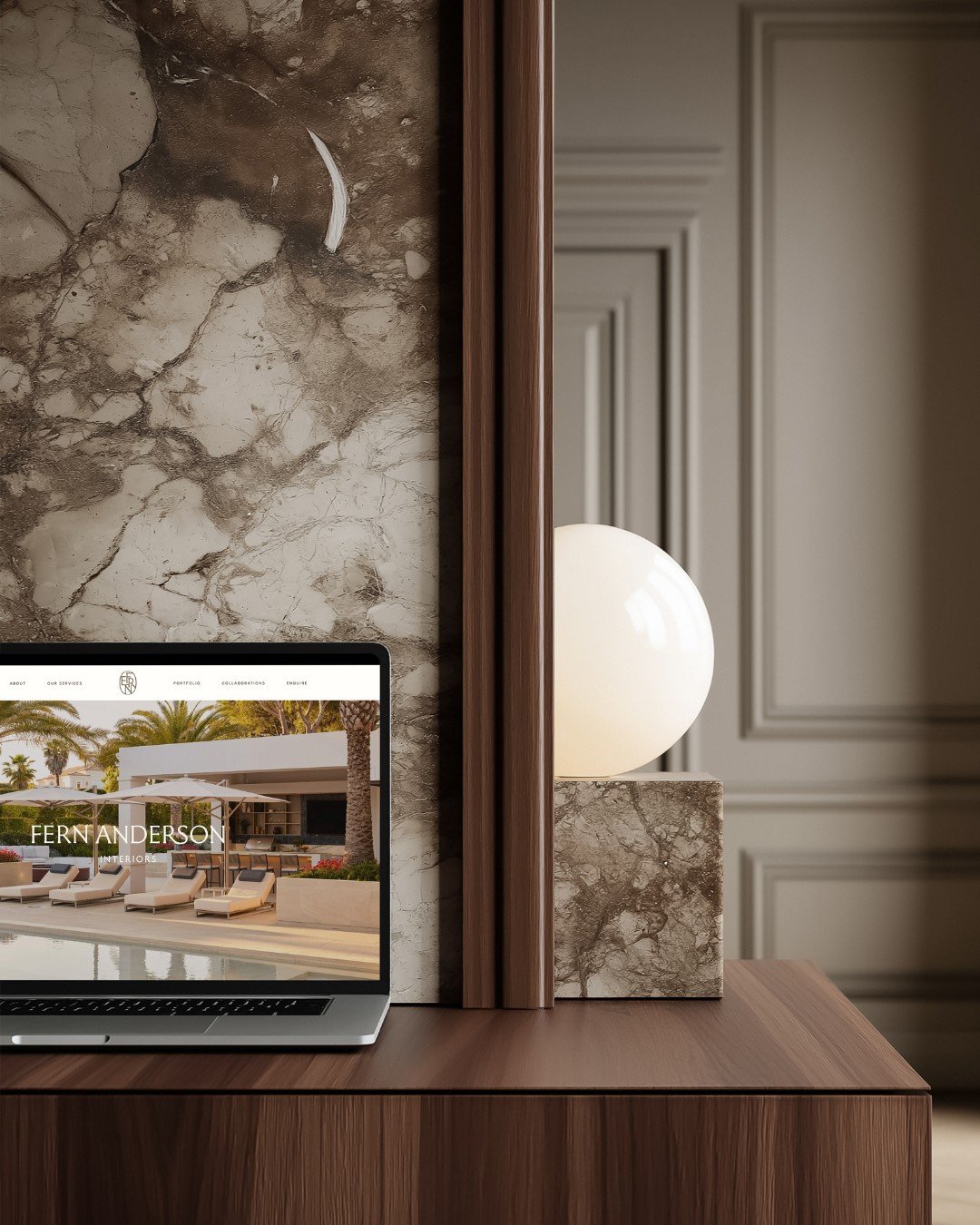
Squarespace Website Design for Fern Anderson Interiors, by The Brand Muse
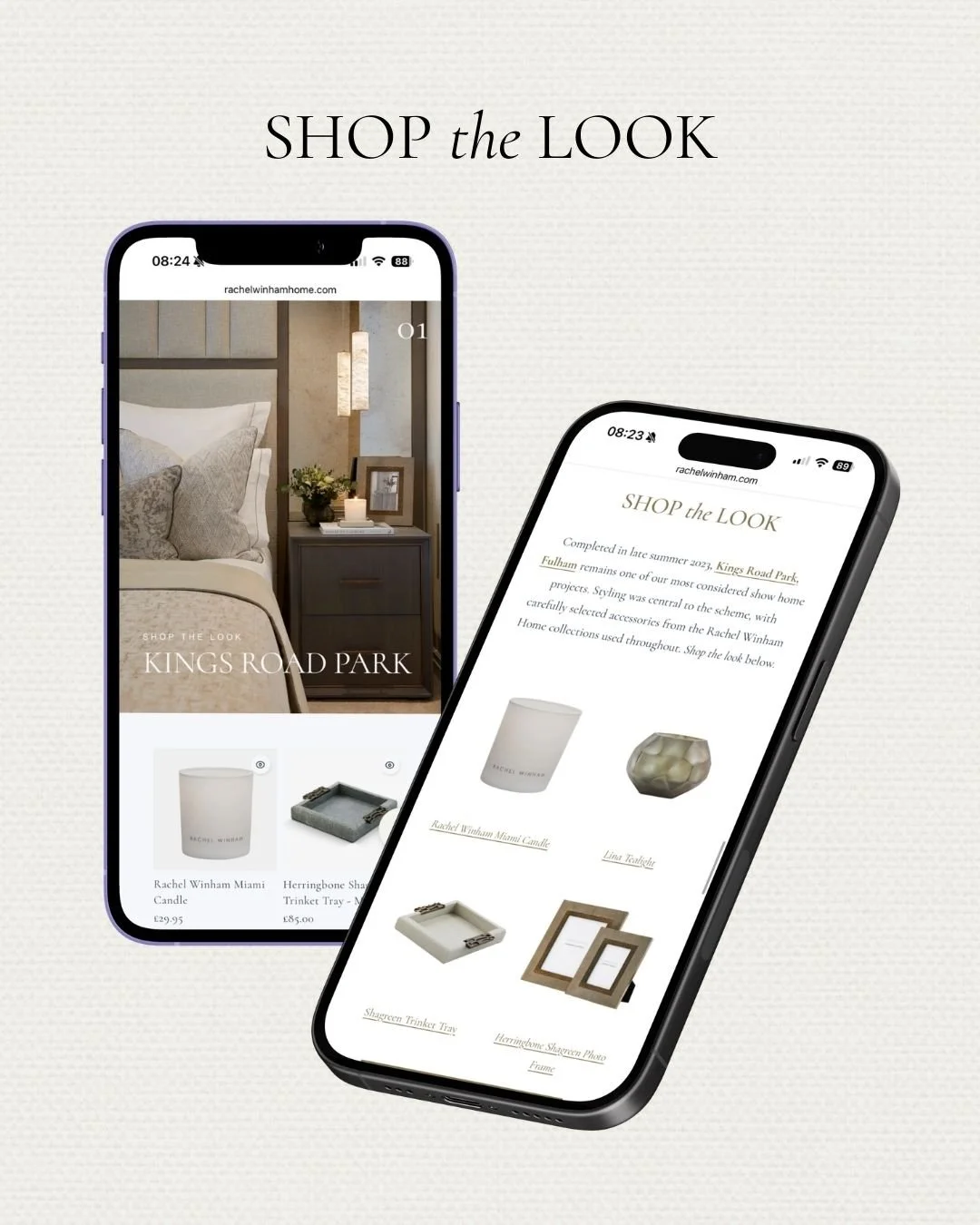
Shopify Website Design for Rachel Winham Interior Design (Home), by The Brand Muse
Brand Presentation and Client PerceptionHere's something subtle but important: what does your platform choice say about your practice?
A Squarespace site, by default, says "I've invested in a well-designed, premium platform. I care about aesthetics." This sends a professional signal, especially if you're just starting out. Potential clients browsing your site will see it and think "this person understands design."
A Shopify site can signal the same thing, but only if it's custom-built. A default Shopify site might feel less polished, which could work against you unless you're operating in a more commercial or product-focused space.From a pure brand perspective, Squarespace's out-of-the-box beauty is an advantage for design practices. You look good without having to do extra work. The platform does some of the heavy lifting for you.
Which Platform for Which Business ModelLet's get specific. Here's how to think about this:
Choose Squarespace if: You're service-only (design consulting, project management, space planning). Your brand aesthetic is important and you want a platform that presents beautifully by default. You want a simple, low-maintenance platform. You want built-in SEO with minimal ongoing optimisation. You're on a modest budget. You're not technical and don't want to hire developers. You're planning to blog as part of your content marketing.
Choose Shopify if: You're selling products alongside services. You need robust e-commerce functionality. You have a developer or budget to work with one. You want maximum design flexibility. You're already familiar with Shopify from an existing business. You expect your site to grow in complexity and want a platform that scales with you. You're comfortable managing more moving pieces.
The Real Decision
In the end, this decision comes down to whether you're building a service business or a commerce business. If you're an interior designer selling your expertise and time, Squarespace is probably the better choice. It's beautiful, it's simple, it won't slow you down with unnecessary complexity, and it presents your practice in the most professional light.
If you're selling products, or if you think you will, Shopify is the more capable platform. Its e-commerce functionality is legitimate, its flexibility is real, and it can grow with your business.
Don't overthink this. Both platforms are professionally viable. The question is which one aligns with your business model and how much complexity you're willing to manage. Choose the one that lets you focus on your actual work, designing beautiful spaces and serving your clients, rather than managing your website.
The platform you choose matters, but it's just one piece of your overall web strategy. At The Brand Muse, we help interior designers and design-led brands build websites that don't just look beautiful, they work strategically to attract the right clients, communicate your value, and position your practice for growth. Whether you're building a new site from scratch or evaluating your current platform, we can help you think through the decision. Explore our Web Design service and download our Investment Guide to learn more.